Featured

Welcome to Wild and Free Homeschooling

Wild and Free Homeschooling

My name is Holly. I’m a homeschooling mom of 5 sons, ranging in age from 14 to 4. We live in West Virginia. We began homeschooling last year with my then 2nd grader and kindergartener. I wasn’t expecting to enjoy homeschooling as much as I did, but over the past year I have become fairly passionate about it. We started homeschooling because the public school system was not working for my son. I tried my best to work with the system but to no avail. Homeschooling was my last resort. I have since come to believe that homeschooling is not only a better option for many families than our modern educational system, but it is a healthy, efficient, productive, nurturing way for children to learn. In this blog I’ll be discussing our reasons for moving away from institutional education and documenting our struggles and successes. We are still figuring things out as we go along, as so many of us do as we move through life. Nothing in this blog is meant to be an indictment of the way anyone else chooses to live their life or parent their children. This is what is working for my family. I hope that our story and testament can serve as an example of how homeschooling can work in practice. The homeschooling movement is growing. We are neither revolutionaries, religious fanatics or rebels. We are just working to do what is best for our children one day at a time. Welcome to Wild and Free Homeschooling.


Be yourself; Everyone else is already taken.

— Oscar Wilde.

This is the first post on my new blog. I’m just getting this new blog going, so stay tuned for more. Subscribe below to get notified when I post new updates.

Origin Story Fall Semester

Week 1

Introduction to Big History

  1. Readings
    • Big History: Introduction, pages 1-9
    • Earth Science Textbook, p. 360-363, Chapter 11.5. “Dating with Radioactivity”
  2. Lectures/Documentaries
    • “What Is Big History?” by David Christian. Great Courses Plus. Lecture 1.
    • “How Big, How Far, How Fast”, The Universe, Season 6, Episode 6. Amazon Prime Video
  3. Assignment
    • Answer Chapter Questions 1-5 on p. 8.
    • Also answer these questions below:
      • What is meant by “the long duree”?
      • What is the chronometric revolution?
      • What are the 5 Key Features of Complex Things?
      • What are the 9 Thresholds of Increasing Complexity?
    • Define Key Terms on p. 8
    • Explain in 1-2 paragraphs how radioactive dating works.

Week 2-7

Threshold 1: Big Bang Cosmology and the Origin of the Universe

We begin at the Big Bang. First, we will look at how we discovered the Big Bang and the evidence that it really happened.

  1. Week 2: The Discovery of the Big Bang, from Ptolemy to Newton
  2. First, watch the documentary “Beyond The Big Bang” until 33:30. This is a documentary on YouTube. Link here: https://www.youtube.com/watch?v=dJgx_NvJxOs
  3. Complete the readings:
    • Big History, Chapter 1, p. 12-15, Until the heading “Mapping the Universe”
    • Science Matters, Chapter 1, p. 3-25
  4. Assignment
    • Define these 9 key terms. Use more than 1 sentence when necessary:
      • Big bang cosmology
      • Cosmology
      • Helicentrism
      • Newton’s First Law of Motion
      • Newton’s Second Law of Motion
      • Newton’s Third Law of Motion
      • Newton’s Law of Universal Gravitation
      • Terrestrial gravity
      • Keplar’s Laws of Planetary Motion
    • Begin a detailed timeline for the major scientific discoveries that lead to the Big Bang. Include the names and dates of scientists and describe their major contribution. Include, for this week:
      • Ptolemy
      • Copernicus
      • Kepler
      • Galileo
      • Newton
  5. Week 3: The Discovery of the Big Bang, From Einstein to Present Day
    1. First, watch the documentary “Beyond The Big Bang”, from 33:30 until the end. This is a documentary on YouTube. Link here: https://www.youtube.com/watch?v=dJgx_NvJxOs
    1. Complete the readings:
      • Big History, Chapter 1, p. 15 at “Mapping the Universe” until p. 22. Stop at Threshold 2: The Origin of Galaxies and Stars
      • How to Build a Universe, Chapter 1: How We Discovered the Big Bang, p. 10-29
    1. Define these 15 key terms. Use more than 1 sentence when necessary;
      • Parallax
      • Cepheid variables
      • Standard candles
      • Spectroscope
      • Hertzsprung-Russell diagram
      • Inverse-square rule
      • Absorption lines
      • Doppler effect
      • Red-shifted
      • Einstein’s Theory of Special Relativity
      • Einstein’s Theory of General Relativity
      • Einstein’s Cosmological Constant
      • Primeval atom (also called primordial atom)
      • Steady State Theory
      • Cosmic Background Radiation
    1. Complete the detailed timeline you began last week. At its completion this timeline should be able to tell the story of the discovery of the Big Bang. Include the names, dates and major contributions of the following scientists:
      • Einstein
      • Father Georges Lemaitre
      • Edwin Hubble
      • Gamow and Alpher
      • Penzias and Wilson
      • Guth
  6. Week 4: Science and Religion

A major theme in the history of science is the conflicts that arise with the Church. This week we are going to look at this “conflict” in more detail.

  1. Monday: Read our own religious tradition’s Origin Story, found in Genesis 1:1-2:3. Read Revelation 1:8, Revelation 22:12-14 and Revelation 21:5-7.
  2. Tuesday: Research independently the Galileo affair. Here are some links to start:

Was the Galileo affair truly as simple as “Heliocentrism went against scripture and so Galileo was condemned?” Write a brief summary of what happened after you have read your sources.

  • Wednesday: The Catholic Church has a long history of both members of the clergy and lay public who have made significant contributions to science. You will see this as you continue your science studies. Read through these lists linked below. Pick out 5 lay people and 5 clergy members who you feel have made significant contributions. Write down their names, dates and contributions.
  • Thursday and Friday as needed. Essay due MONDAY.
    • Re-watch Beyond the Big Bang, only from minute 44:30-44:40.
    • Read The Language of God by Frances S. Collins, Introduction, p. 1-7.
    • Consider the quote by Cardinal Baronius invoked by Galileo: “The Bible tells us how to go to Heaven, not how the Heavens go.”
    • Write a 1-2 page essay on this topic. In what ways are science and religion the same and in what ways are they different? What questions do they each attempt to answer? What truths are they each searching for? Can science address religion and in the same way can religion address science? Why or why not?
  • Week 5-6: Big Bang Theory
    • Read:
      • “How to Build a Universe”, Chapter 2: A Universe is Born
      • Big History, Chapter 1, p. 19-22. Start at “The Origin of Everything according to Big Bang Cosmology”. Stop at Threshold 2.
      • Science Matters: Chapter 11: The Cosmos, p. 182-193
      • “The Language of God”, Chapter 3: The Origins of the Universe.
    • Assignment:
      • This week you will begin the main timeline in your Science Notebook. Keep this up to date. You may draw this timeline however you wish so long as it is neat, accurate, appropriately labeled and complete. It will begin at the Big Bang and end at the development of agrarian civilizations.


Begin by creating a timeline of the events of the Big Bang, from the Planck Era to through the Recombination Era. There are a few examples of this chronology available. One in particular is in the book “Maps of Time: An Introduction to Big History” by David Christian on the dining room bookshelf. It’s on page 27, Table 1.1: “A Chronology of the Early Universe.

  1. Define these 12 key terms. Use more than 1 sentence when necessary.
    • Matter
    • Antimatter
    • Energy
    • Atomic matter
    • Plasma
    • Light year
    • Dark matter
    • Dark energy
    • Cosmic inflation
    • Quarks
    • Entropy
    • Quantum foam
    • Answer these questions.
      • Summarize the Big Bang Theory in a few paragraphs. Tell the story of what happened.
      • Draw the basic model of the atom. Include charges.
      • What is the equation by Einstein that allows matter and energy to transfer back and forth?
      • If matter and antimatter cancel each other out, why was there matter left over to create the universe?
      • Considering the molecular structure of hydrogen, deuterium, helium and lithium, why do you think they were the first elements to be created?
      • Why were the elements at this time unstable ions? What exactly is an ion?
      • When exactly did the Cosmic Microwave Background appear? It’s left over radiation from what exactly?
      • In the “baby picture” of the Universe, explain the color system. What do the blue parts become? What do the orange, red and yellow parts become?
      • How is it possible for us to see back in time?
  2. Week 7: Intermission- The Four Fundamental Forces of Nature and the Standard Model of Particle Physics

This is a very rudimentary introduction to the four fundamental forces of nature and The Standard Model of Particle Physics.

  1. Read:
    1. How to Build a Universe
      • Chapter 4: The Force is Strong With This Universe
    1. Science Matters
      • Chapter 4: The Atom
      • Chapter 9: The Fundamental Structure of Matter, p. 153-164
    1. Watch:
    1. Assignment:
      • Define these terms:
        1. Element
        1. Nucleus
        1. Electron
        1. Proton
        1. Neutron
        1. Quarks
        1. The standard model of particle physics
        1. Identify the four fundamental forces of nature
      • Draw the atom for the element Helium. Label the nucleus, protons, neutrons and elections. Label the charges and identify the number of quarks (up and down quarks) in each subatomic particle in the nucleus.
      • Write a 1-2 page paper explaining the four fundamental forces of nature. Make sure you define each force, give it’s characteristics, describe what it does and identify it’s force carrier. When were the four fundamental forces one and when did they split off during the Big Bang?
      • Explain to me in a written response the Higgs field. What is it?

Week 8-11

Threshold 2: The Origin of Galaxies and Stars

  1. Week 8-9:

In which we go from protogalaxy to protostellar cloud to protostar to star.

  1. Readings:
    • Big History, Threshold 2, p. 22-24
    • How to Build a Universe, Chapter 5, p. 90-107
    • Watch:
    • Assignment:
      • Answer these questions:
        • Where did the matter for the galaxies come from? What pulled that matter together?
        • What is dark matter? What difference did it make in the formation of galaxies?
        • In “How to Build a Universe”, the author talks about how hydrogen atoms came together to create hydrogen molecules, like triatomic hydrogen. What’s the difference between an atom and a molecule?
        • What exactly is a photon again?
        • What is nuclear fusion as it relates to stars?
        • So there was an initial flash of light, which was what created the Cosmic Background Radiation “baby pictures of the universe” that we’ve already seen. Then it all went dark and there were the “Dark Ages”. Then the first stars formed. Now there is light again. Why is there light again? What happened? (Hint: Re-read page 106-107 in How to Build a Universe)
        • What 2 elements made up the first stars?
        • What are some differences between the first stars and our own sun?
      • Write a play by play of what happens as a galaxy is formed. The sequence in Big History can be a bit overwhelming. Make sure you read the boxes with visuals in the “How to Build a Universe” chapter. Particularly “Sowing the Seeds of the Stars” on p. 98-99. Think about what happens as the protogalaxy turns into a protostellar cloud, then to a protostar and then finally a star. The Professor Dave video will also help you here.
  2. Week 10-11: The Life and Death of Stars
    1. Readings:
      • How to Build a Universe, Chapter 6, The Life and Death of a Star, p. 110-131
      • Smithsonian’s The Universe: Definitive Visual Guide, p. 232-239, Star Forming Nebulae on p. 240-241, Main Sequence Stars on p. 250-252, Old Stars on p. 254-255 and Stellar End Points on p. 266-267. Look through the pictures of the various stars. They’re really pretty awesome.
    1. Watch:
      • The Universe: Season 1, Episode 10, The Life and Death of Stars. This is on the History channel website. You will need me to sign in through Xfinity for you.
      • How the Universe Works: Season 1, Episode 8: Supernovas. This is on Amazon Prime Video.
      • Professor Dave Explains. Watch this one on Star Classification: https://www.youtube.com/watch?v=Y5VU3Mp6abI and then this one on The Life and Death of stars: https://www.youtube.com/watch?v=4xIQGbYur9Q
    1. Assignment:
      • Describe the following stars:
        • Brown dwarf
        • Red dwarf
        • Sun-like star (or yellow dwarf)
        • Supergiants (or hypergiants)  
      • Create a labeled visual representation of the life cycle of a sun-like star, or yellow dwarf. Identify each phase it goes through and explain what lead to the change. (ex/ Yellow dwarf to red giant, etc etc.)
      • Explain the Herzprung-Russell (H-R) diagram
      • Answer these questions:
        • Where does most of the iron in our universe come from?
        • How about gold and silver and uranium?
        • How did World War III almost start in 1963? What was the astrological explanation?
        • Which element is the last element that a dying star creates? Why is this element the final one before the star dies completely?
        • From the video The Life and Death of Stars: “Gravity brings the star together and then gravity wants to crush it.” What usually stops gravity from crushing the star (when it’s in the main sequence)?
  3. Week 12: Galaxies
    1. Readings:
      • How to Build a Universe, Chapter 7: Meet the Galaxy Gardeners, p. 134-159
      • Smithsonian’s The Universe: Definite Visual Guide, p. 302-339. Read about Types of Galaxies, Galaxy Evolution, Galaxies, Active Galaxies, Galaxy Clusters and Galaxy Superclusters.
    1. Watch:
      • How the Universe Works, Season 1, Episode 2: Black Holes. This is on Amazon Prime
      • The Universe, Season 2, Episode 14; Nebulas. This is on the History channel website. You will need my log-in for Xfinity.
    1. Assignment:
      • Your main assignment this week is to LEARN and ABSORB all the visuals about the galaxies around us. The universe is amazing and beautiful. Pay attention and really think about how small we are in the grand scheme of things.
      • Answer the question:
        1. Why does the author of How to Build a Universe call black holes “cosmic gardeners”?
      • Also, pick a galaxy. Do some research on it. Make sure to identify it’s location, characteristics and classification. Write a 1-2 page paper on your galaxy.

Threshold 3: The Creation of New Chemical Elements

  • Week 14: Threshold 3

First, read How to Build a Universe, Chapter 3 and watch the Crash Course Chemistry videos. Next, read Big History: Threshold 3 and watch The Elements and Creating the Elements videos. Complete the assignments.

  1. Readings:

Week 15-18

Threshold 4: The Emergence of the Sun and Solar System

  1. Week 15: The Birth of the Sun and our Solar System
    • Readings:
      • Big History, Chapter 2, Threshold 4: The Emergence of the Sun and Solar System, p. 34-42. Stop at “The Early Earth- a Short History”
      • How to Build a Universe: Chapter 8: Cooking Up a Solar System, p. 162-193
      • Smithsonian’s The Planets: The Definitive Visual Guide, p. 24-39 on the Sun, Our Star
    • Watch:
    • Assignments:
      • Define these terms:
        1. Radiometric dating
        1. Radioactivity
        1. Half-life
        1. Accretion
      • Explain in 1-2 paragraphs the Solar Nebula Theory. Include who came up with it and when.
      • Draw a full page diagram of the sun (the core, the radiation zone, the convection zone, the photosphere, atmosphere and the corona). Give information about characteristics and what happens in each layer.
      • Answer these questions:
        • Why do all planets in the solar system form basically perfect spheres?
        • Where did our moon come from?
        • Where did Mars’ moons come from?
        • What is “The Frost Line”?
        • Why did the planets end up where they are currently, with the rocky terrestrial planets being the inner planets and the gaseous planets being the outer planets? (Note: Go with the explanation in the video. The one in the book is a bit confusing. There are several theories.)
        • What are sun spots and why do they happen? Explain solar flares.
        • How long does it take for an escaped photon to reach us here on Earth? How fast do the photons travel?
        • Big Picture Question: At the end of the Sun video, the narrator says that those escaped photons go on to power life on Earth. What does he mean specifically? How does it do that?
  2. Week 16: Exploring the Planets

This week you will be going through the planets, watch short videos on Amazon Prime Video and reading about each planet in the Smithsonian’s The Planets: The Definitive Visual Guide to our Solar System

  1. Day 1: Mercury and Venus
    • Watch:
      1. SpaceFiles, Season 1, Episode 2, Mercury.
      1. SpaceFiles, Season 2, Episode 3: Venus.
    • Reading:
      1. Read p. 44-57 for Mercury and p. 58-71 for Venus.
    • Assignment: Complete Planet Information Sheets for each planet.
  • Day 2: Mars
    • Watch: SpaceFiles, Season 1, Episode 7: Mars
    • Reading:
      • Read p. 110-136
    • Assignment:
      • There’s a ton of information out there about Mars. Write a 1-2 page summary of the planet Mars, including characteristics, temperatures, moons, geographical terrain, seasons, atmosphere, etc. How likely do you think it is that we could ever colonize Mars? Why or why not? This is due on Friday.
  • Day 3: Jupiter and Saturn
    • Watch:
      • Spacefiles, Season 1, Episode 9: Jupiter
      • SpaceFiles, Season 1, Episode 10: Saturn
    • Reading:
      • Read p. 150-169 for Jupiter
      • Read p. 170-195 for Saturn
    • Assignment:
      • Complete Planet Information Sheets about each planet.
  • Day 4: Uranus, Neptune and Pluto
    • Watch:
      • SpaceFiles, Season 1, Episode 11 for Uranius and Neptune
      • SpaceFiles, Season 1, Episode 12 for Pluto
    • Reading:
      • Read p. 196-203 for Uranus
      • Read p. 204-211 for Neptune
    • Assignment:
      • Complete a Planet Information Sheet for each planet
  • Day 5: Asteroids, Meteroids and Comets
    • Watch:
      • SpaceFiles, Season 1, Epsiode 8: Asteroids, Meteroids and Impacts
      • SpaceFiles, Season 1, Episode 13: Comets
    • Reading:
      • P. 138-145 for Asteroids
      • p. 222-231 for comets
    • Assignment: Turn in Mars paper
  • Week 17-18: Early Earth and the formation of our Moon
    • Readings:
      • Big History, Chapter 2, pages 42-53, From “The Early Earth- a Short History” until the end of the chapter.
      • Smithsonian’s The Planets: The Definitive Visual Guide, p. 72-109, Earth and the Moon
    • Assignment:
      • Up until now we’ve said gravity brought stars and planets together. While gravity did cause bigger particles and rocks to stick together, it wasn’t what caused the much smaller particles to stick together first. What did?
      • Describe the early Earth. Would you want to live there? Why or why not?
      • Where did the water from our oceans come from?
      • What role did volcanoes play in the formation/evolution of Earth?
      • How does the molten iron in the core keep us alive?
      • What impact did the collision with Thea have?
      • One of the scientists said the water that we drink today is billions of years old. How is that possible? Explain.
      • Research the Hadean Eon. Fill out an Eon Fact Sheet.
      • Define these terms:
        • Chemical differentiation
        • Hadean Eon
        • Atmosphere
        • Continental drift
        • Paleomagnetism
        • Seafloor spreading

Christmas Break Assignment:

 Read: The Story of Earth, Read the Introduction and then Chapters 1-5, pages 126

This is your ONLY Christmas Break Assignment. Public schools give Christmas Break Assignments too just like they give Summer Reading Assignments, so I hope to hear very little complaining. It’s not difficult reading. TAKE NOTES. 😊

“But what’s the point of reading the book if there’s not a test???”

This is what I heard from my incoming 9th grader this week. Both of my older children were given summer reading assignments. My incoming 7th grader is reading through the Chronicles of Narnia series and my incoming 9th grader has a list of classic and exceptional science fiction books. I’ll post the list he’s reading through at the end of this post in case anyone is interested.

I played around with the idea of having them do an assignment for each book. An essay, a book report, a study guide, vocabulary lists, etc. Ultimately I decided against it. All of these books stand on their own as exceptional literary works. I want them to understand that we can read, or draw, or play an instrument for the sheer pleasure of it. So, no. We have conversations about the books they are reading but there are no assignments. That’s not to say that there is never a place for assignments in literature. For this, though, I decided to just leave it. The books stand on their own. Reading the books alone will confer benefit.

It took my incoming 9th grader to the third book to realize he was just required to read the book and talk about it. He was pretty upset about this when he figured it out. “But what’s the point?!?! Why read a book if it’s not going to be for a test????” This is what our test-centric school system has done to our kids. The point of learning is for a test. Why do any work if it’s not in preparation for proving your knowledge (and then prompting forgetting what you learned, of course)? You do the work. You cram. You take the test. You get the grade. And then you forget. Books are not read for their own sake. They are read to jump a hurdle. C.S. Lewis (the author he was reading at the time) would be rolling over in his grave.

I hope that as these next four years go along for my oldest son he learns that true learning takes place in absence of the threat of an exam. After all, I haven’t been tested since I graduated from grad school 7 years ago. Did I stop learning? Was that as knowledgeable as I would ever become, at that one point in time, and it’s been all downhill from there? Of course not.

When I decided to bring my sons home from our public school system I decided then and there that they would not do any more standardized testing. I’m not putting my kids through it. The only exception would be the SAT/ACT for college admissions and the AP exams for college credit. I’m not doing yearly testing. I’m also not giving my children exams when there are other options for assessing knowledge. When a written paper or a conversation will do, I’m going to choose those alternative options. Grades are necessary in high school for college admissions. I will give them and give them honestly. For elementary and middle school, though, they’re not necessary in home schooling. I’m not teaching my children that we learn for an arbitrary number or letter on a report card or exam. We learn because it makes us better humans.

Here is the list that he is reading through, for anyone who is interestedd.

  • Starship Troopers by Robert Heinlein
  • The Stand by Stephen King
  • The Space Trilogy by C.S. Lewis
  • The Earthsea Quartet by Ursula Le Guin
  • The Death of Grass by John Christopher
  • A Canticle for Leibowitz by Walter M. Miller, Jr
  • Dune by Frank Herbert
  • The Drowned World by J.G. Ballard
  • Foundations by Isaac Asimov

Camping in Washington DC for the 4th of July!

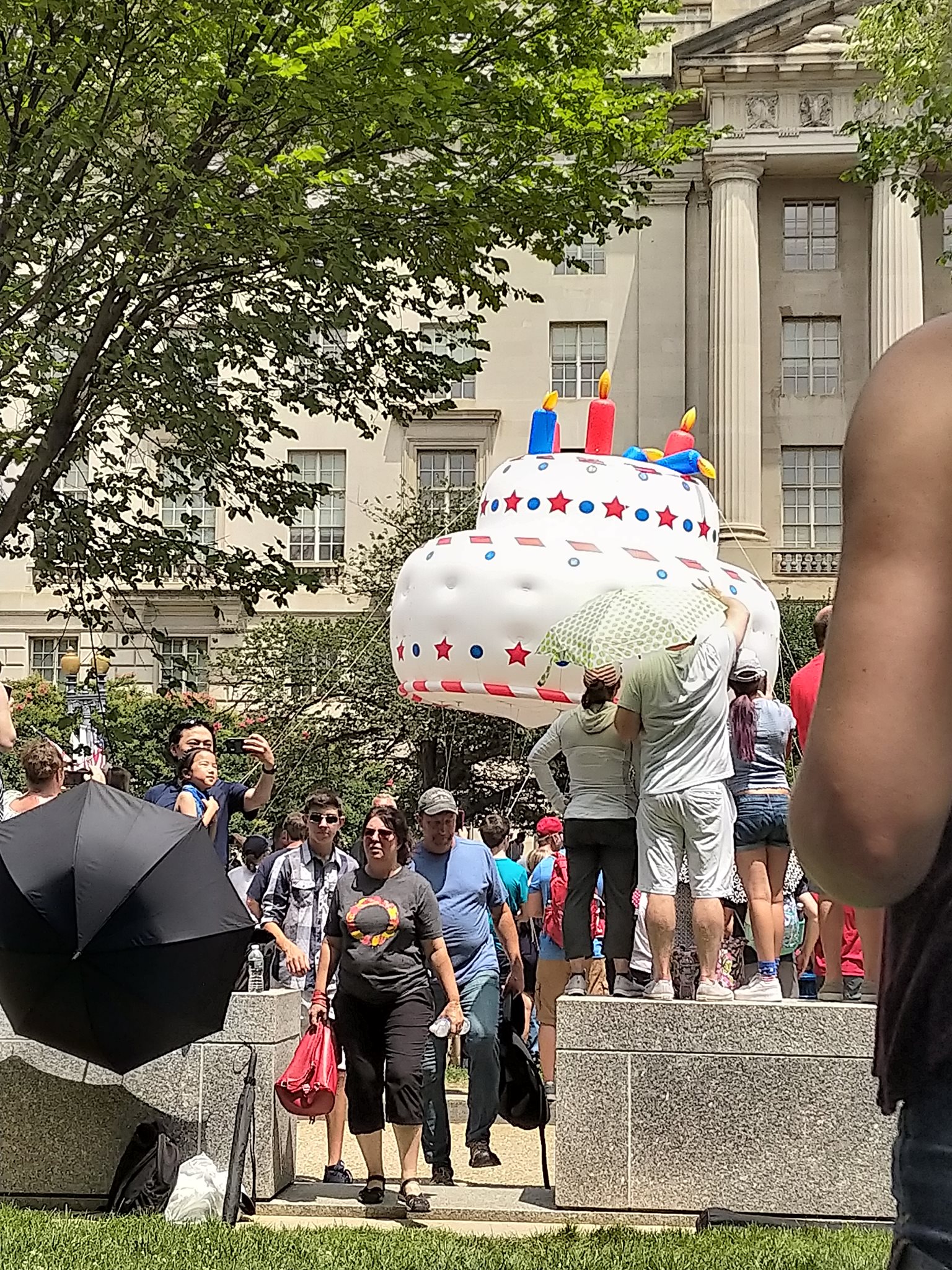
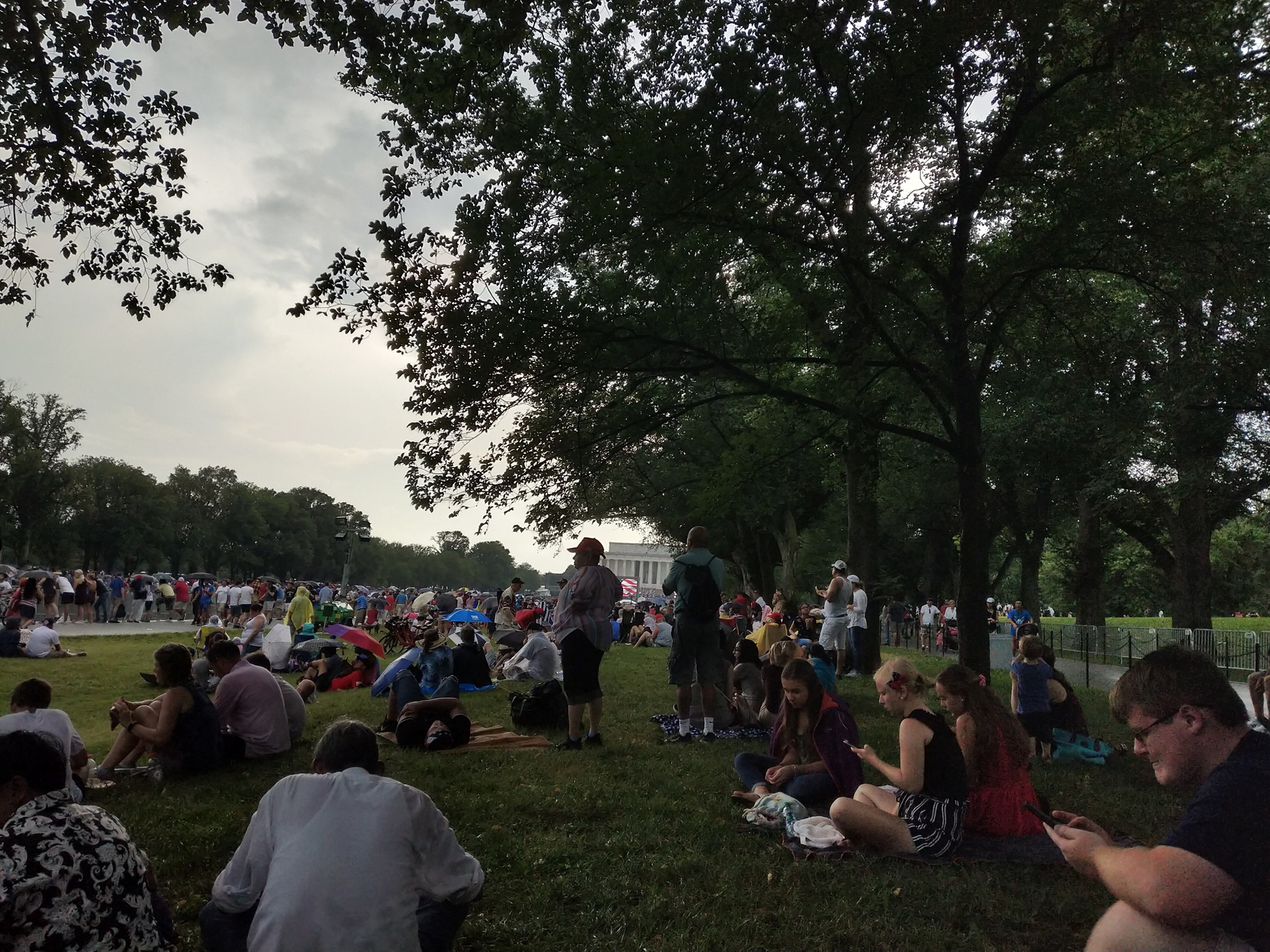
My husband had to work over the 4th, so I decided to take the kids on a camping trip solo to Washington DC. I had never been camping solo so it was an adventure! Three other families we are friends with were there as well. In total we had 7 adults and 21 kids! It was so nice to be around other large Catholic families. All of the parents were completely unphased by the kid chaos and all of the older siblings were obviously used to helping care for the younger kids. When we were all at the campground it was like a big Catholic kid compound. The kids would just run around in hordes. It was awesome.

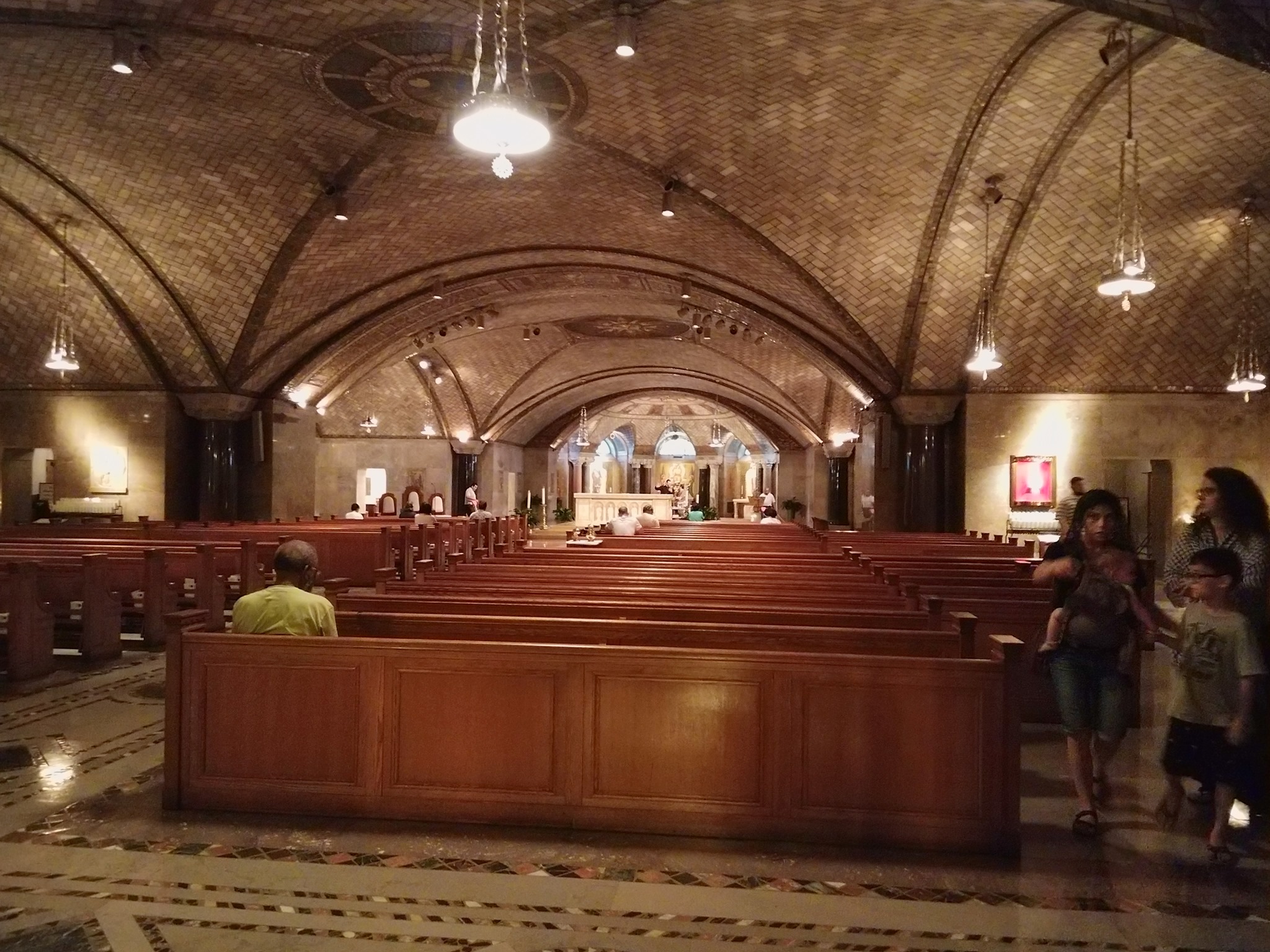
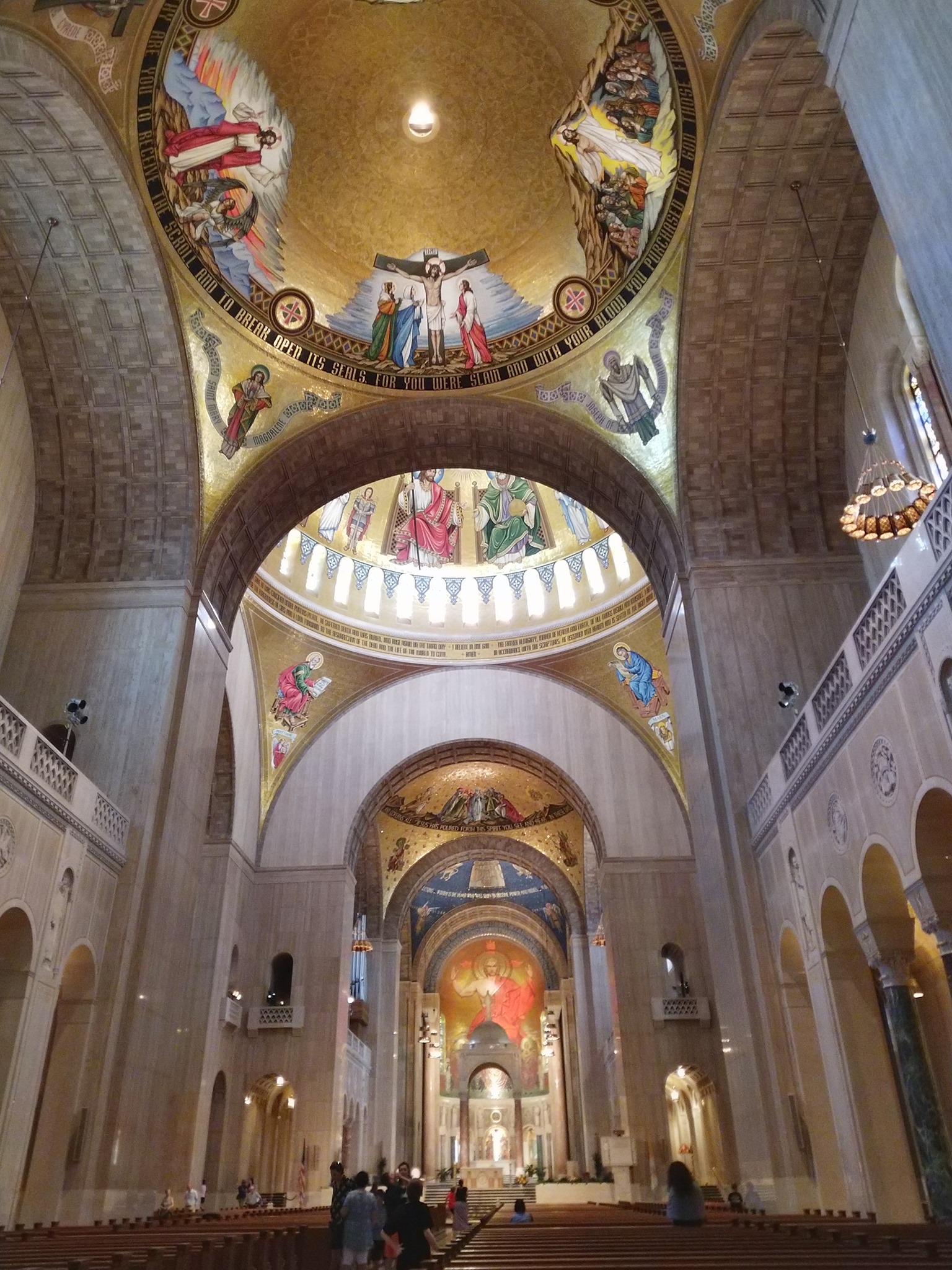
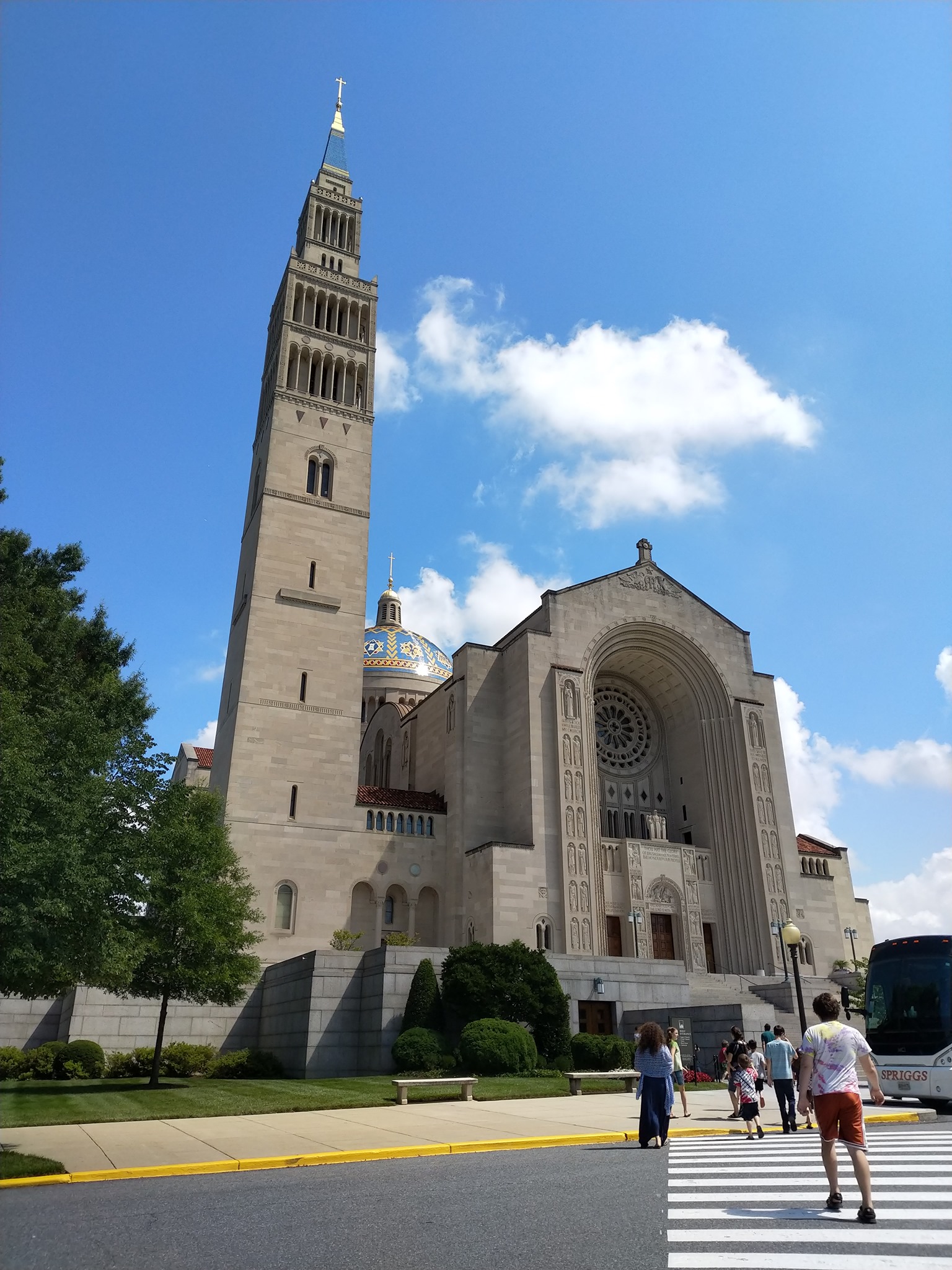
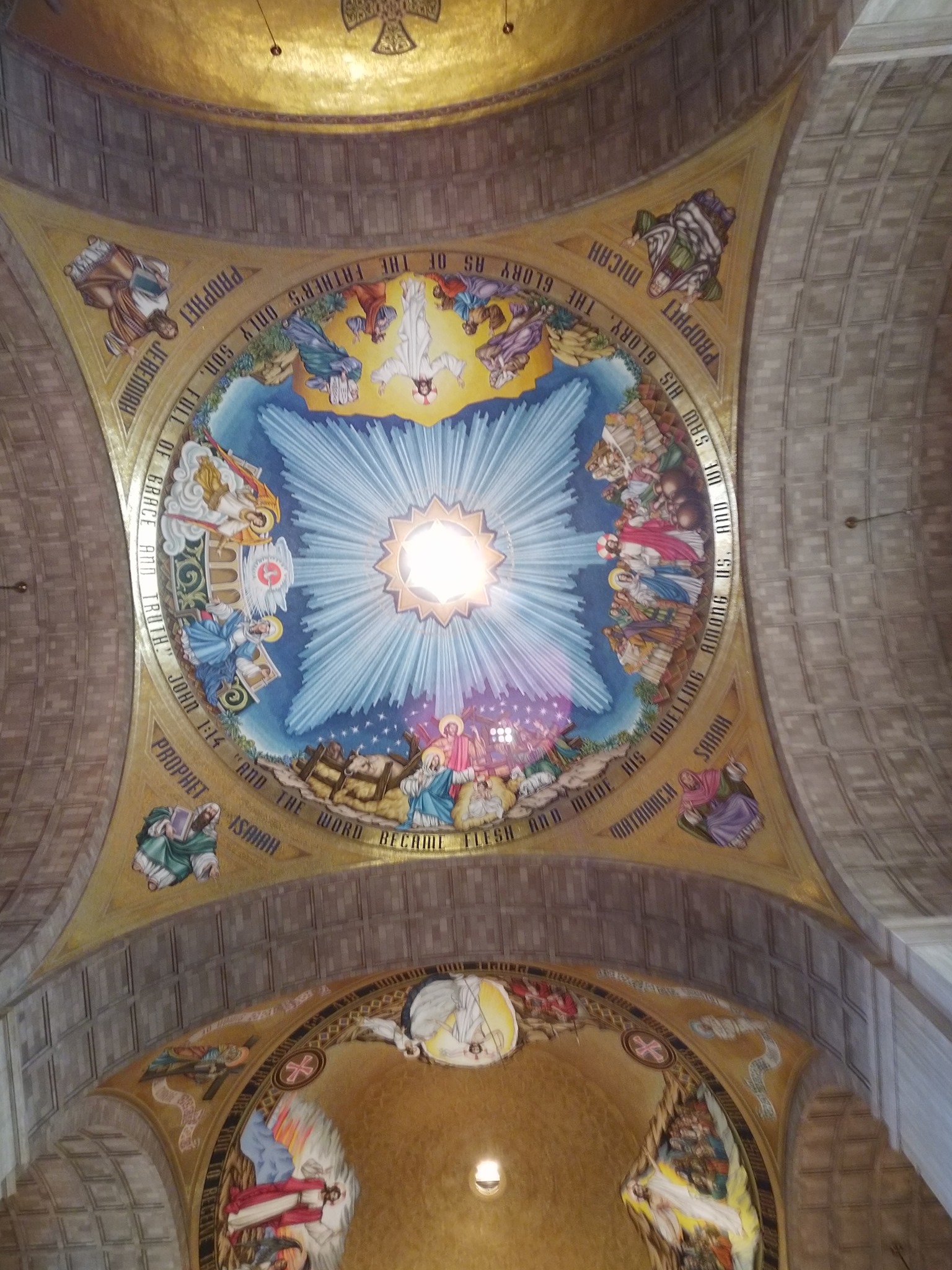
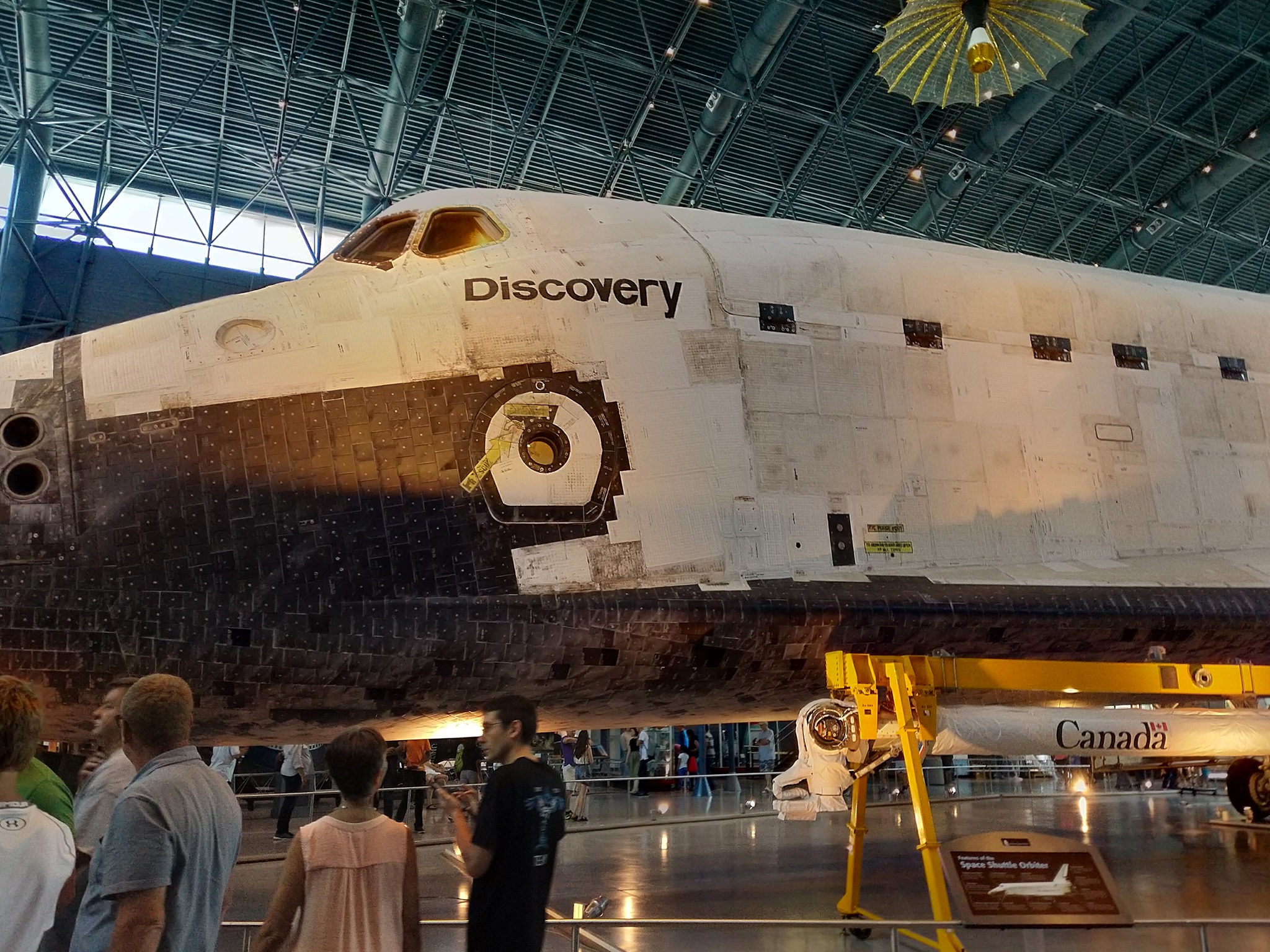
The campground we stayed in is at Greenbelt Park a few miles outside of DC. On the 4th we took the metro in to downtown. We saw the parade, attended Trump’s speech at the Lincoln Memorial and then stayed for the fireworks. The kids were exhausted by the end of the day but it was a good experience. The next day we toured the Basilica of the National Shrine of the Immaculate Conception and went to the Smithsonian Air and Space Museum out near Dulles Airport.

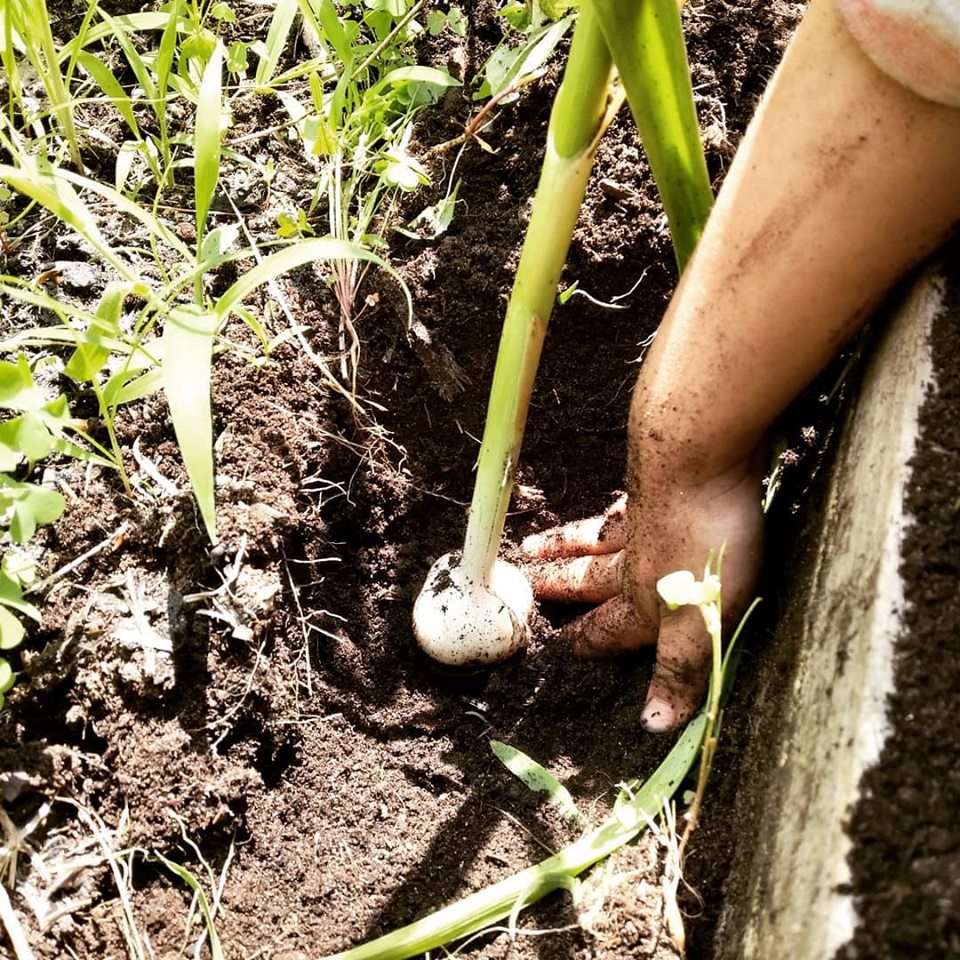
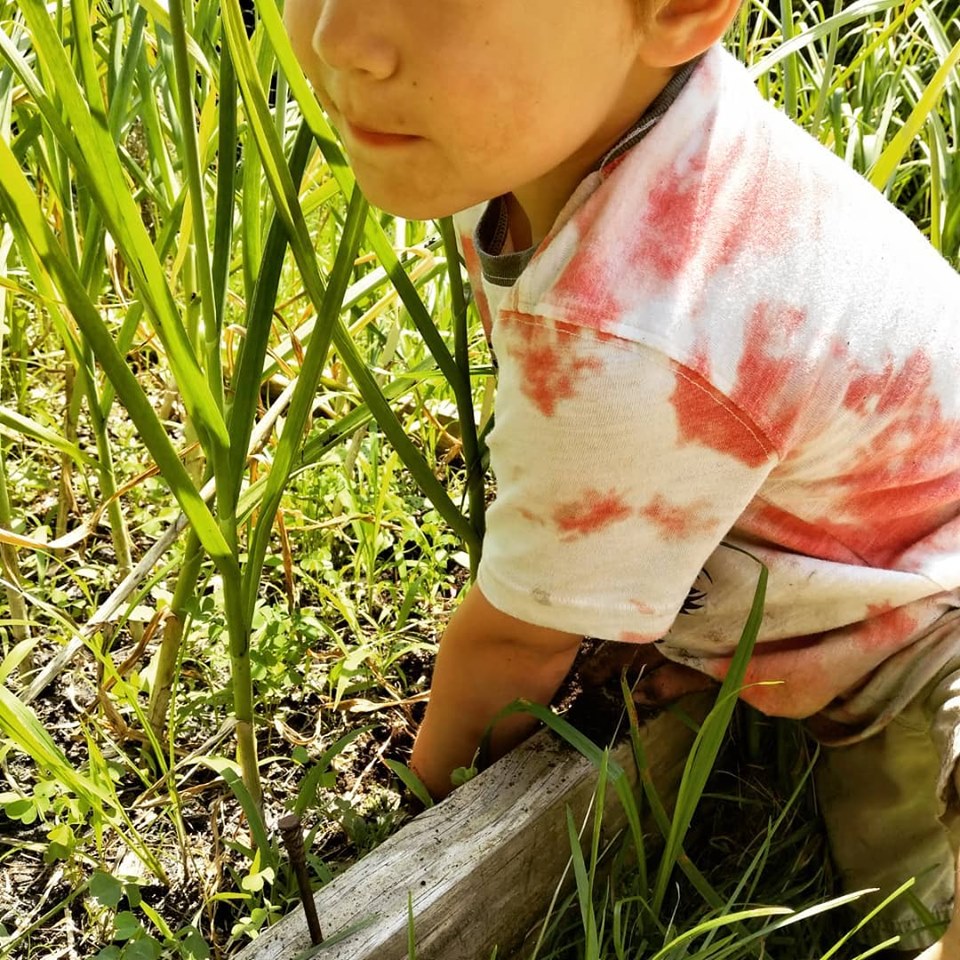
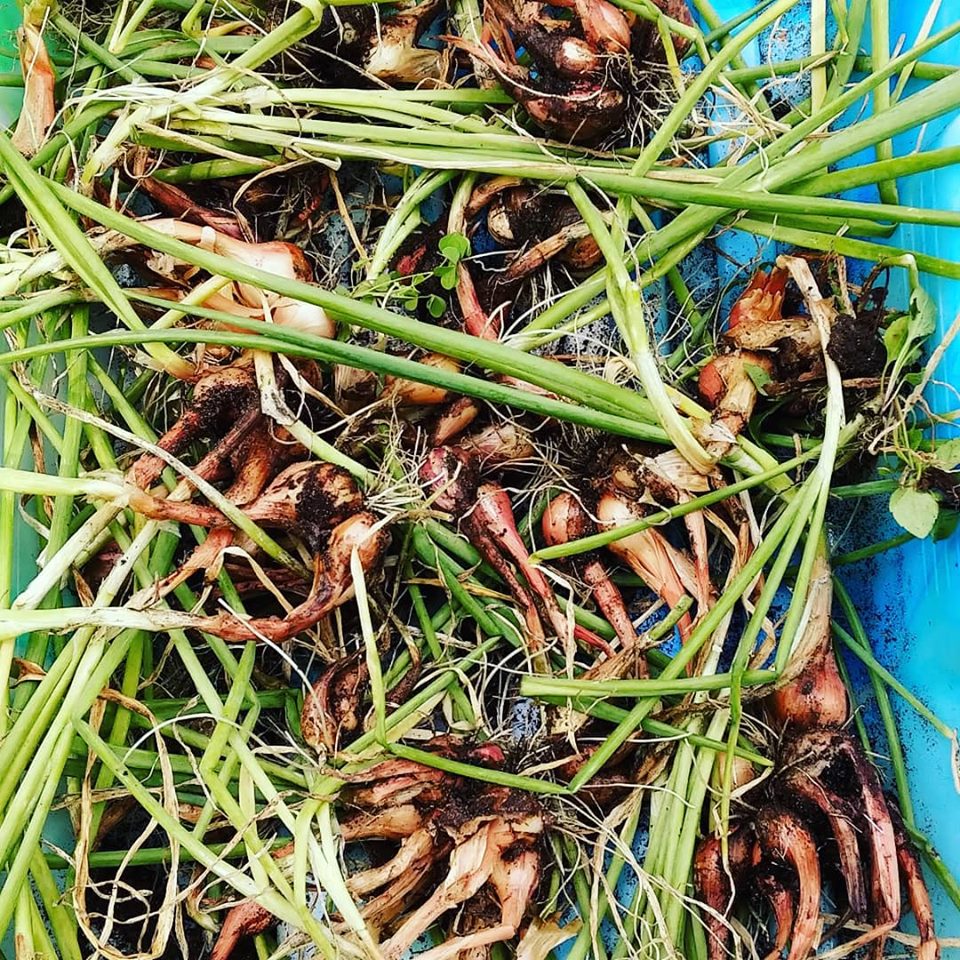
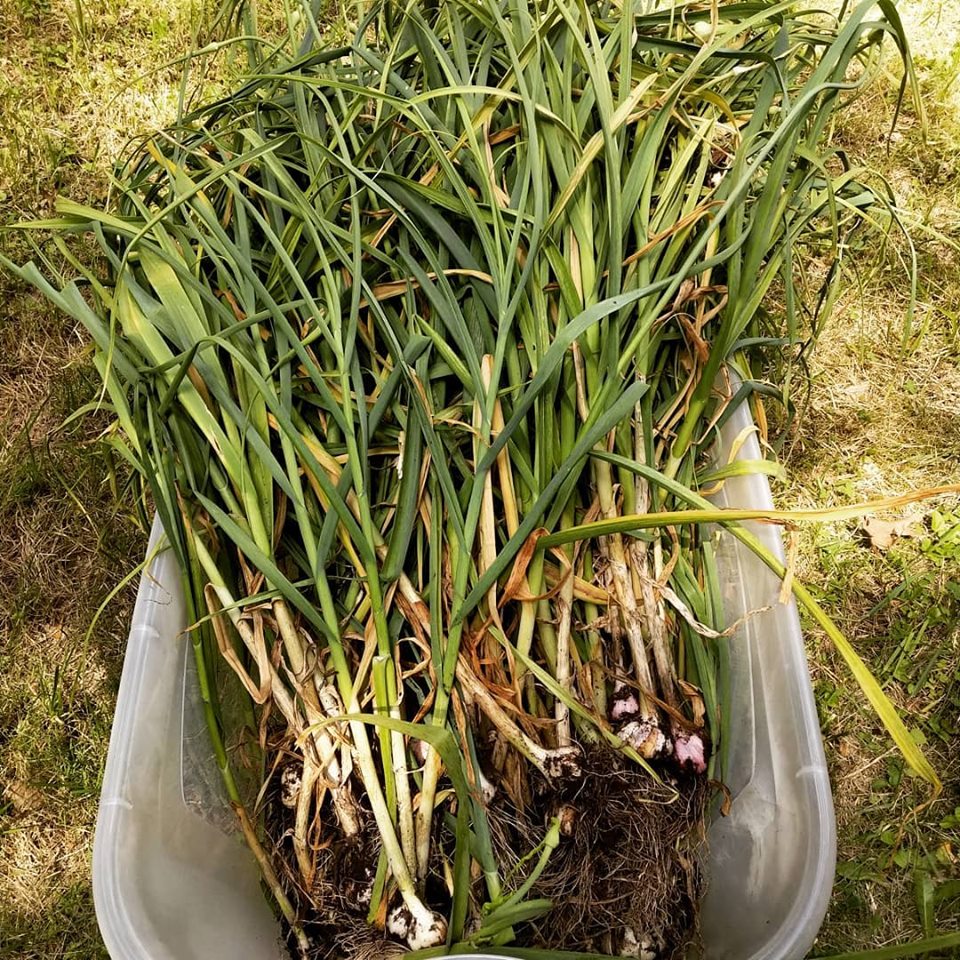
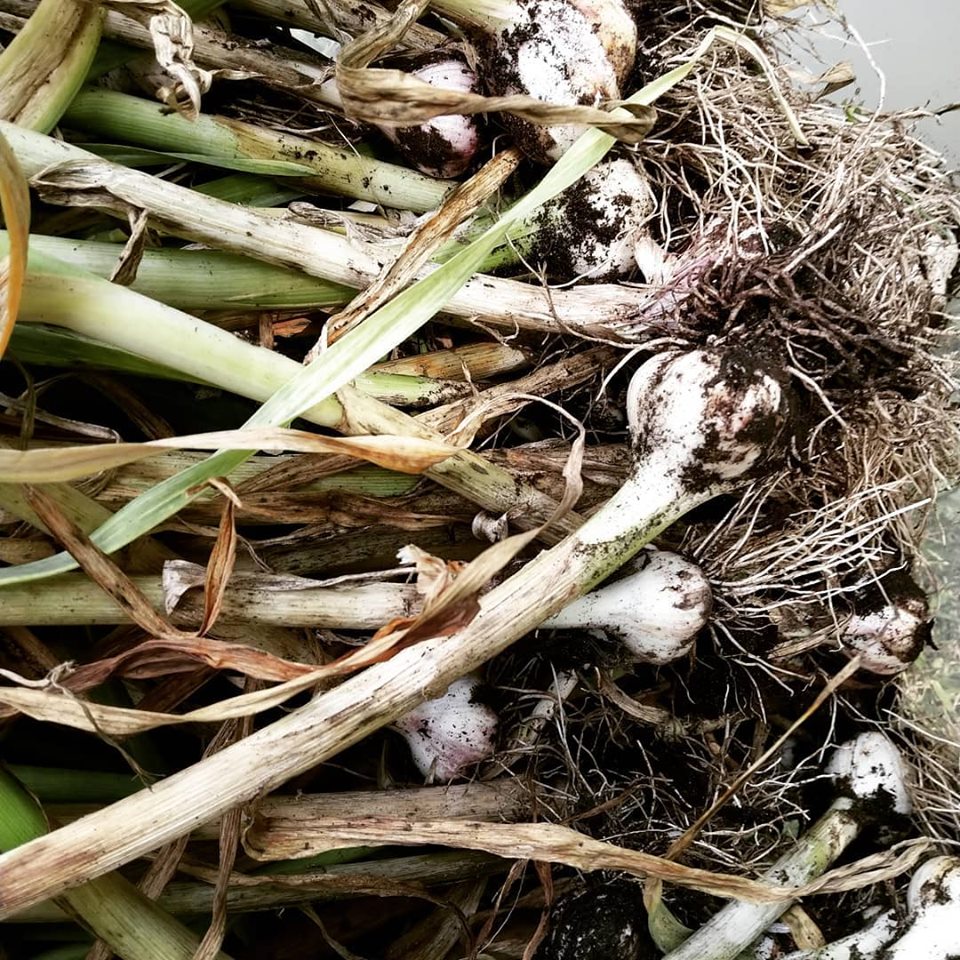
We harvested garlic and shallots today.

This year we decided to try out some garlic. Our beds lay empty over the winter, so why not?? The boys planted the garlic and a few shallots with their Uncle in November. This week they finally seemed ready to harvest! We got them in there and taught them how to dig up the garlic from underneath. Don’t pull them up by the necks! They did a great job. We ended up with well over 100 bulbs. I’m looking forward to the final count. Now we are going to lay them out on a screen in our garage to cure. The garlic was actually very easy and hands off to grow. After planting we weeded 3 times or so throughout the spring. I never even had to water it. (I did keep an eye on it, just in case.) We bought this garlic from Filaree Garlic Farm in Washington state.

My unsocialized homeschoolers…


Boy Scout Camp 2019

One of the biggest misconceptions about homeschooling is that the children are unsocialized. Perhaps this was true in days long past when homeschooling was rare or families were geographically isolated. This is no longer the case. There are plenty of opportunities for homeschooled children to meet and learn alongside other homeschoolers. There are so many opportunities, in fact, that it can be overwhelming as a homeschooling mom to try to figure out which options work best for your family. There are play groups, open gym times, religious meet-ups, co-ops and hiking groups, to name a few. There are also all of the other traditional extracurricular activities open to both homeschooled and institutionally schooled children, such as little league, music lessons, swim lessons, Scouting, karate, church groups and 4H club. Any type of activity you’d like can usually be found if you look. If it doesn’t exist, homeschoolers are a very ingenuitive lot. If it doesn’t exist and the need is there, they’ll create it.

The difference between homeschooled and institutionally schooled socialization opportunities is this- Homeschooled socialization activities are family centered. What do I mean? Well, we believe that the family is the cornerstone of society. The family is very important. The cultivation and enrichment of the family is one of the most vital endeavors we take as humans. Therefore, socialization should begin at home. It begins in the family. Children socialize with their parents, their siblings, their cousins. One of the problems with institutionalized schooling is that it takes children away from their family for 8 hours a day, 5 days a week, 9 months out of the year. Institutionalized schooling monopolizes this time that children are meant to spend building their familial relationships. When you add in the number of children that also spend time in before school and after school programs, the situation becomes even worse. They then have even less time with their families. They create alternative families, school families, friend families, some favorable, some not so favorable. Regardless, these aren’t real families. How many of us can say that we are still regularly in touch with the people we graduated high school or college with? Aside from a friend or two and perhaps your spouse, my bet is few. Homeschooling places the family back at the center of the child’s life. Additional socialization activities, of which there are many, are then outcroppings of that foundation.

Making the decision to homeschool.

My husband and I have 5 children, ages 14 to 4. I have a BS in Biology and a Masters of Science in Nursing, specializing in Nurse Midwifery. My last job was managing a maternal child health program through the local health department covering two large counties in SC. I quit a little over 4 years ago to stay home full-time with our children. My husband has a Bachelors in Mechanical Engineering. He also has a Medical Degree and currently works as a physician. By all available metrics we are successful products of the public education system. We both went to public high schools and graduated from public state universities for our university, grad school and med school degrees. We have done well academically and were frankly model students. So why did we make the decision to take our children out of public school, bring them home and educate them ourselves??

I wish I could say that it was one simple thing that led us to this point, but the truth is that my disillusionment with the public school system had been building for quite some time. Here is a rough timeline of events that led to our decision.

1) It began in SC, where my 2nd son, who had difficulties with attention and impulsivity, told me that as a punishment for impulsive behaviors he was being denied recess. This absolutely did not make any sense to me. T is not a bad child. He has trouble sitting still. He’s a boy and he needs to move. School is not a place for little boys who need to move. They only are given 20-30 minutes of recess and his teacher was taking away the only time he was allowed to move all he wanted because in class he was moving too much. I wrote an email, was told my child was lying and promised that T would not be denied recess as a punishment.

2) We moved to WV and that’s when the real problems began. In SC my 2 older sons were in the advanced math and language arts classes. This meant that they were a grade level ahead in these subjects. They were also in separate enrichment classes based on their test scores. I was not aware of the difficulty I would face in getting my sons in the correct classes in WV. This is where I learned that in the public school system the squeaky wheel is definitely the one that gets the oil. I called. I emailed. I sent notes. My sons need to be tested. They are in the wrong math and language arts. They have already learned this stuff last year. They are just repeating what they have already been taught and aren’t making any progress. Please, put them in the correct classroom. I can’t put into words really the level of bureaucracy and red tape I had to go through to just get my sons in the correct grade level for math and language arts. It was infuriating. It took months and months. Practically the entire fall semester they were waiting on testing and IEP meetings and such. 3-4 months were wasted learning material they had already learned in SC because of the snails pace in WV. I thought about children with parents who both work full-time jobs. How do these parents manage to cause enough of a fuss to get anything done in the school system? But finally, FINALLY it was fixed. They were finally put in the correct grade levels for these subjects and I thought it was over. Wrong.

3) The next year the school again mistakenly put T in the lower level math. He was in Math 5 when he should have been in Math 6. Again he was back to learning what he had already learned. Again I had to work with the school to get T in the correct math class. It wasn’t as arduous this time because we had the end of year testing from last year proving that he had already mastered this material, but it was a process nonetheless.

4) During this same time my 3rd son, B, was having significant trouble reading. B has always had slower language development. He began speaking later. He was less talkative than his peers. B was having difficulty decoding words. We had meetings. He was put in reading intervention classes. He was sent home extra homework just for him, because if he’s not getting it more homework will surely fix it! (Wrong.) Towards the end of the year we had a final meeting. I asked the team of teachers I was meeting with about the possibility that B had dyslexia. I had begun to suspect this when I was reading with him at home. He didn’t approach words the same way that his brothers had when they were learning to read. He would sometimes say the ending sound or even the middle sound first and then go to the beginning. Even looking at a sentence sometimes he would say the words in the wrong order. Spelling was very difficult. He would often get the letters correct but they weren’t in the right order. I was told that they don’t test for dyslexia anymore, so it didn’t matter if he had it or not. They would be using the same reading program regardless. It was decided that B would repeat 1st grade. Okay, I said. He’s the youngest in his class. Maybe this is just what he needs.

B’s second round of first grade was an absolute waste of time. The time he spent in reading intervention was increased. He made minimal progress and at the end of the year his reading level was only maybe 1 level above what it was when he started 1st grade he first time, 2 years prior. More than this, B was now convinced he was stupid. He may not be a talkative child but he’s very perceptive. His peers had progressed, but he had not. He knew the scores he received on his spelling tests, which were all failing. He knew he had to go to special classes. When we would do homework with him and he would get a word wrong, he would repeat, “I’m stupid, stupid, stupid!”. Testing at school caused a lot of anxiety for B. The tests seemed to be all of the time. They tested spelling, sight words, reading and then the standardized tests which seemed excessive to me. It seemed they spent weeks talking up these standardized tests. B was an emotional mess about school. Naturally he hated it. It was at this time I had started to think about homeschooling. I decided to sign B up for 2nd grade anyway, just to see, and then take them all out for the next year.

B started 2nd grade and it was immediately a disaster. Every morning it was a struggle to get him in the car. He hated it with a passion. I received almost daily notes or calls from his teacher. B was talking in class. B wasn’t sitting in his seat. B was asking “Why?” too many times and arguing with the teacher. The final straw came when I received a call from the principal telling me that B had said “shit” in class. He was in big trouble apparently. The principal had me scold him over the phone. She made him tell me what he did. She made him apologize to me. B came home off the bus that day and immediately said to me “Mom, I didn’t say that. The boys that sit next to me said ‘Hey let’s tell the teacher that B said the s word!’ So they did! I knew if I told her I didn’t do it that she would think I was lying and then I would just get in more trouble. So I told her I did it so I wouldn’t get in trouble for lying. But I didn’t! I didn’t say that!” He had no reason to lie about it because I wasn’t punishing him at home and he knew that. I believed him. I feel like you know your children, especially at that age, and can get a sense of when they’re telling the truth and when they’re not. I felt B was telling the truth. The bullying was the last straw for me. I made plans to withdraw him that day. I told him we were going to finish out the week but that I was submitting my paperwork to the Board of Education and that we would be homeschooling.

B’s transition to homeschooling and really recovery from the public school system is a blog post in and of itself. (In short, I will say that after the 1st month home he stopped saying he was stupid. After a few months in an Orton-Gillingham based phonics program, a program specifically recommended for children with dyslexia, he was reading.) After I brought B home I began to do more research into homeschooling. I learned about classical education and met other parents who were successfully homeschooling their older children for college prep. I learned about ways to take AP classes when homeschooling. I learned about dual enrollment with community colleges. I learned about how to write transcripts and tackle college applications from a homeschool setting. I started to really think about the freedom and flexibility homeschooling could provide all of my children. I started to think about how little time children have during the school year to be outside in nature, exploring their world. We starting attending a co-op of other kids who just spent time outside exploring and learning about nature in an unstructured environment. I picked up books by John Holt and John Taylor Gatto. I watched lectures through Classical Academic Press. I decided to bring home my kindergartener at Christmas break. I decided to bring home my 2 older children at the start of the next school year. I didn’t think I would be a homeschooling mom. For years I thought those women were crazy. I looked forward to a time when all of my children were in school and I could go to hot yoga classes and book clubs alone in the middle of the day. Yet here we are- and I love it.